
Decluttering your home or workspace is a powerful first step toward a more organized life—but what comes next is just as important. After a cleanout, whether it’s a garage, attic, office, or entire home, the next challenge is figuring out how to organize and store the items you chose to keep.
At G&S Junk Removal, we help Los Angeles County residents clear out the clutter—but we also believe in helping people build sustainable habits afterward. In this guide, we’ll walk you through smart storage strategies so your cleanout isn’t just a temporary fix, but a lasting transformation.
Why Storage Matters After a Cleanout
Once the junk is gone, the remaining items should have purpose, value, or function. But without the right storage plan, things can slowly start piling up again. Here’s why organizing what you keep is so important:
-
Maximizes your space
-
Reduces future stress
-
Makes your items easier to access
-
Prevents clutter from creeping back in
-
Protects valuable or sentimental belongings
Whether you’re living in a Pasadena apartment or managing a busy household in San Gabriel Valley, storage systems can make a huge difference in your daily comfort and productivity.
Step 1: Categorize What You Kept
Before you store anything, take a moment to group items into categories. Common categories include:
Seasonal décor (holiday items, winter/summer gear)
Sentimental items (photos, memorabilia, keepsakes)
Tools and equipment (lawn care, hand tools, hardware)
Documents (tax records, receipts, personal papers)
Hobbies and crafts (art supplies, sports gear)
Emergency supplies (first-aid kits, flashlights, water)
Sorting helps you understand what needs to be easily accessible versus what can be stored long-term.
Step 2: Choose the Right Storage Locations
Not everything belongs in one place. Where you store items can impact how well you use and protect them. Think about:
Frequency of use – Daily items should be easy to grab. Seasonal or rarely-used items can go up high or out of the way.
Climate sensitivity – Photos, electronics, and paper should be kept in dry, climate-controlled spaces—not garages or sheds.
Safety – Keep heavy bins low and out of children’s reach. Store chemicals in locked cabinets.
Common Storage Zones:
Garage: Great for tools, camping gear, sports equipment, and storage bins
Closets: Ideal for linens, clothing, and document storage
Under beds: Great for off-season clothes or shoes
Basements or attics: For long-term storage of items not frequently needed
Sheds or outdoor units: Best for yard tools and large equipment
Step 3: Use Smart Storage Solutions
Maximize your space by using the right tools. Here are a few of our favorite smart storage ideas:
1. Clear Bins with Labels
Clear bins help you see what’s inside without opening every container. Add large, easy-to-read labels like “Holiday Lights” or “Winter Jackets” to make retrieval easy.
2. Vertical Shelving
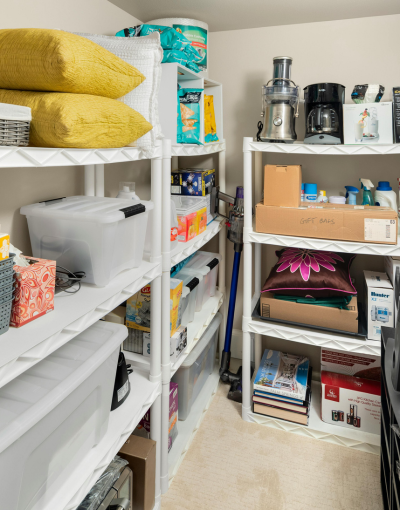
Don’t waste vertical space—install shelving units in garages, closets, or spare rooms. Shelves keep items off the floor and prevent stacking (which often leads to forgotten or damaged items).
3. Drawer Organizers and Dividers
For kitchen utensils, craft supplies, or desk items, drawer organizers prevent the “junk drawer” syndrome.
4. Hooks and Wall Racks
Use wall space! Install hooks in mudrooms for backpacks and coats, or racks in the garage for tools, bikes, and extension cords.
5. Vacuum-Sealed Bags
Perfect for storing bulky items like blankets, pillows, and off-season clothing in small spaces.
6. Storage Furniture
Use ottomans, benches, or coffee tables with hidden compartments to store everyday items neatly in your living space.
Step 4: Create a Simple Inventory
You don’t need a spreadsheet (unless you want one!), but having a simple list of what you’ve stored—and where—can be a huge time saver later.
Try writing down:
Bin number and contents
Location (e.g., “Garage Shelf 2” or “Hall Closet – Top Shelf”)
Notes about seasonal reminders (e.g., “Pull out in November”)
For tech-savvy households, use an app like Google Keep, Trello, or Notes to track your storage info digitally.
Step 5: Schedule Routine Check-ins
Organization isn’t a “set it and forget it” task. Clutter has a way of sneaking back in, especially during holidays, home projects, or major life changes.
To stay on top of things:
Check storage spaces seasonally (4 times a year)
Purge unused items annually
Re-label bins as contents change
Donate or recycle what you no longer need
Your future self will thank you when your garage doesn’t turn into a disaster zone again.
Smart Storage Tips by Room
Here’s a quick rundown of room-specific storage ideas to make your cleanout efforts last:
Garage
Use heavy-duty shelving
Store items in plastic bins (not cardboard, which attracts pests)
Hang bikes, ladders, and hoses on wall racks
Keep chemicals and paints in sealed containers
Kitchen
Use stackable bins in pantries
Add turntables (lazy Susans) for spices and condiments
Utilize vertical space with shelf risers
Store duplicate or unused appliances in higher cabinets
Bedroom
Store off-season clothes in under-bed containers
Rotate your closet with each season
Use drawer organizers for socks, accessories, and jewelry
Office
Shred or scan papers regularly
Use vertical file sorters or labeled folders
Keep cables and chargers in zip pouches or labeled boxes
Final Thoughts
A cleanout is a major accomplishment—but staying organized afterward is what makes the results last. With the right storage solutions, you can prevent clutter from creeping back in and keep your home running smoothly.
If you’re overwhelmed with stuff and not sure where to start, G&S Junk Removal can help. We offer professional cleanout services throughout Los Angeles County, including Pasadena, Altadena, Alhambra, and surrounding areas. We haul away what you don’t need—and leave you with the space to store what matters.
Need help after your cleanout?
Contact G&S Junk Removal for affordable junk hauling, donation drop-offs, and cleanout support that makes room for what matters.